The Hush After the Saw Stops
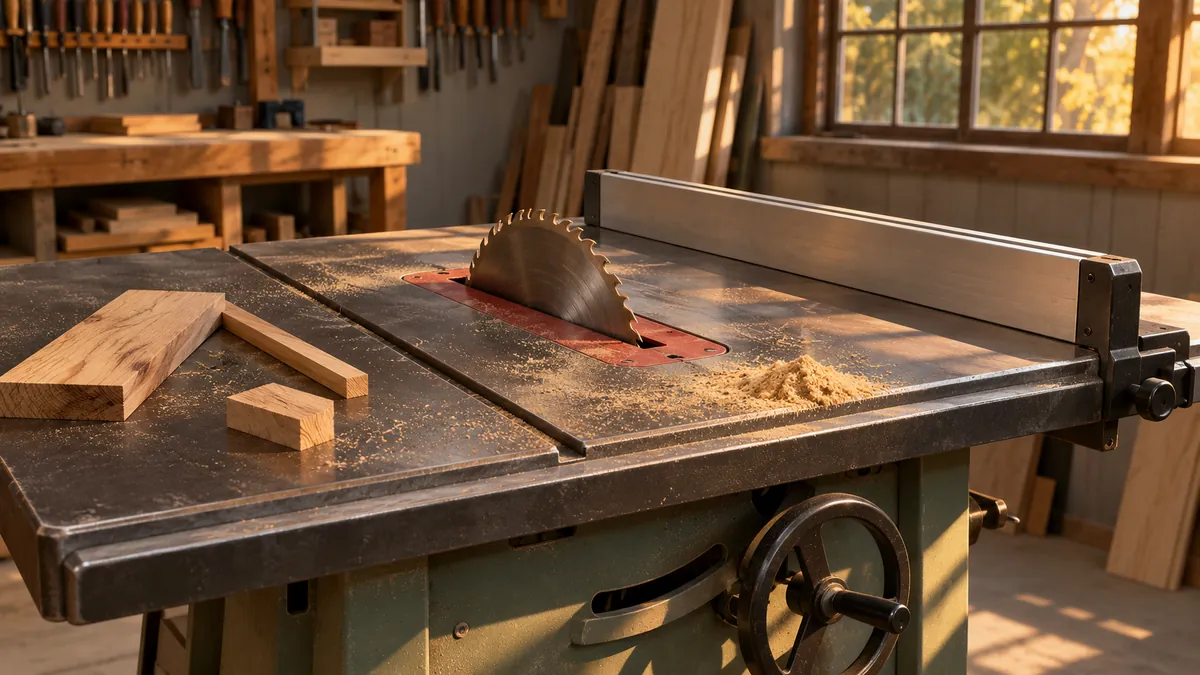
When the switch on a table saw is thrown off, the blade does not stop at once. It sings down through a long falling note, and the shop seems to lean in to listen.
The rule nobody writes down
Ask an experienced joiner what they do between one cut and the next and most will shrug. Watch them, though, and you will see the same thing almost every time. They switch the machine off, they keep their hands away from the blade, and they wait until it has gone completely still. Only then do they reach for the offcut, check the piece, and think about the next step.
Part of that is plain safety. But part of it is something else. The pause lets the last task finish in the mind as well as on the machine. The mistakes in a shop rarely come during the cut itself; they come in the hurried moment after, when someone is already halfway into the next job and still half in the last one.
Why a short silence helps
A day at home has its own saws running: the dishwasher, the phone, the news in the next room, a list of errands that keeps growing. Moving straight from one task to another, without any gap, leaves bits of the previous one hanging. You walk into a room and cannot recall why. You put the keys somewhere while thinking about the call you just made.
Some researchers who look at memory have described brief rest after learning something as a time when the brain seems to settle what it has just taken in. The findings are early and varied, and nobody should read them as a fix for anything. Still, many people past fifty say that a short, deliberate pause between chores leaves them feeling less scattered by evening.
Two quiet minutes, several times a day
Here is how the shop habit looks away from the shop. When you finish a task, any task, stop for about two minutes before starting the next. Put down what is in your hands. Look out of a window, or at something plain, like a wall or a tree. Breathe at an easy pace. Let the last task finish in your head: what did you just do, where did you put things, what is left over?
Then, and only then, name the next task aloud and begin it. Two minutes does not sound like much, but spread across a morning it can change the feel of a whole day. Some readers set a kitchen timer at first, until the pause becomes part of the rhythm, the way it is for the joiner waiting on the blade.
What the pause looks like in a real morning
Picture an ordinary Tuesday. You finish the breakfast dishes, and instead of reaching straight for the phone you stand at the sink for a moment and look at the yard. You notice that the dish towel went back on its hook and the milk went back in the fridge. Then you say, out loud, that the next job is paying the water bill. You sit down, pay it, and stop again. A short look out of the window, a slow breath, a quiet word to yourself about where the receipt went. Then the walk to the mailbox.
Nothing about that morning is dramatic. The difference shows up later, when someone asks whether the bill went out and the answer is simply there, because the task was allowed to finish before the next one began. Joiners have known this for generations. The blade winds down, the room goes still, and only then does the next cut start.