Measure Twice, Then Chalk It Up
The sound for this note is the snap of a steel tape coiling back into its case. In a good shop you hear it twice before anyone touches the saw.
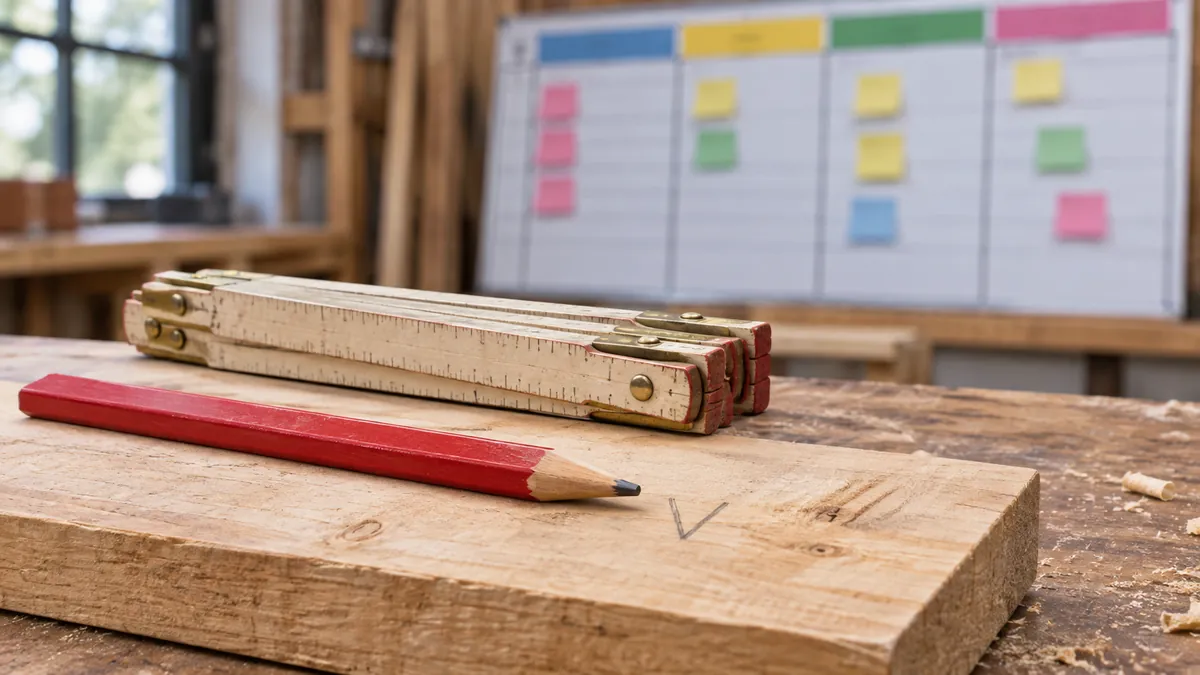
Why the second look matters
Every furniture maker learns the old rule early, usually the expensive way. You measure, you mark, you measure again, and only then do you cut. Nobody takes the second reading out of self-doubt; its job is to catch the small slip that slides in when the head is already moving on to the next job: a 7 read as a 1, a mark made on the wrong side of the line, a board turned end for end while you reached for the square.
Wood is unforgiving here. A cut that is too long can be trimmed; a cut that is too short goes on the scrap pile. So the habit is built into the rhythm of the day until it no longer feels like extra work. The tape comes out, the number is read aloud, the tape snaps back, comes out again, and the same number is read a second time.
A board for the numbers
The other half of the rule is less famous. In our shop there is a chalkboard on the wall beside the bench, and every measurement for the piece in progress goes up on it as soon as it is taken. Nobody is expected to carry six lengths and four widths in their head while they set up a saw. The board carries them. The head is left free to think about the grain, the clamps, the next step.
There is something worth borrowing in that. Much of what feels like forgetting in later years is really overload: too many small facts held at once, with no place to set them down. A board, a pad by the phone, a card in the shirt pocket, gives those facts a place to wait.
Checking before acting, at home
Try the shop rule on ordinary days. Before you leave the house, say out loud the three things you are going out for, then say them again at the door. Before you take a pill from the organizer, read the day on the lid twice. When someone tells you a name at a party, repeat it once in conversation and once more when you say goodbye. Put a small board or a sheet of paper on the refrigerator for anything with a number in it: an appointment time, a phone extension, a parking level.
People who study everyday recall often point out that saying something aloud and writing it down give the mind two more chances to hold it. Some people over fifty who adopt a second look as a routine say they spend less time retracing their steps. It is a small habit, and like the tape it works best when it becomes automatic.
Our oldest cabinetmaker keeps one more habit worth copying. At the end of the day he reads the board from top to bottom before wiping it, saying each number out loud even though the job is done. He says it settles the day. Try a version of that at home: before bed, read the fridge sheet once, aloud, and tick what was handled. Whatever is left becomes the first line of tomorrow. It takes under a minute, and it closes the day the way a clean board closes a job, with nothing left floating around for the head to worry over through the night.