The Note a Plane Makes
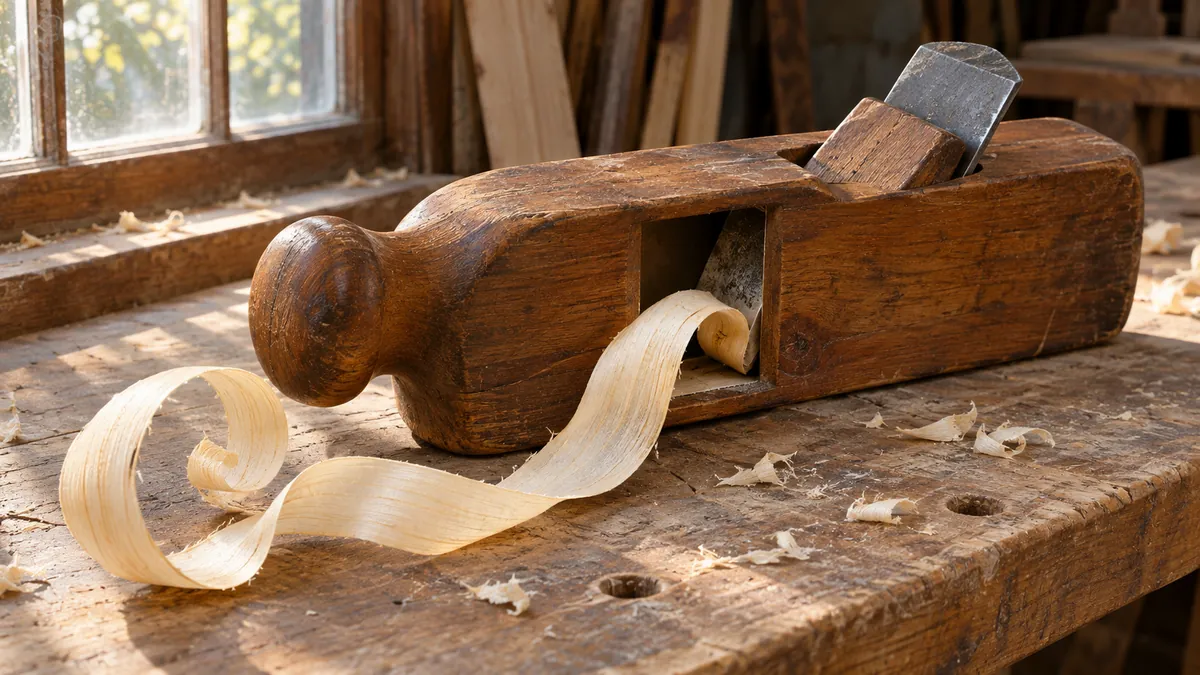
In our shop the first test of a hand plane is not done with the eyes. You push it once along a pine board and you listen.
What the wood tells the hand
A plane that is set right makes a soft, even hiss, a little like someone breathing out slowly through closed teeth. The shaving comes up in one piece and rolls over on itself. A plane that is dull, or set too deep, does something else entirely. It catches, skips and chatters, and the sound turns into a stutter you can hear from across the room. Old cabinetmakers who trained apprentices used to stand behind them with their arms folded and say nothing until the stutter started. Then they would say one word: listen.
What they meant was not simply to hear. Everyone in a shop hears; the radio is on, the compressor kicks in, somebody is sweeping. They meant to pick one sound out of the noise and keep it in the front of the mind while the hands did their work. That ability grows with daily use the way a forearm does at the bench, and it fades when it is left in the drawer.
Listening on purpose, away from the shop
Nobody reading this needs a plane to practise. The same kind of attention can be pointed at a voice. Pick one conversation a day, at the kitchen table or on the phone with a grandchild, and decide before it starts that you will only listen. Do not plan your reply while the other person talks. Do not glance at the television. Let the words come in the way the shaving comes off the board, one long piece.
Afterwards, while the kettle heats or on the short walk back from the mailbox, recall three details from what you heard: a name, a number, something that made the other person laugh. Say them to yourself, or better, write them on the back of an envelope. The next time you talk to that person, ask about one of them. People notice, and the detail tends to stay with you longer for having been used twice.
Researchers who study attention and recall have long described something close to what the shop teaches: what we notice deliberately seems easier to bring back later than what simply washes past us. A fair number of people with grey at the temples report that one focused conversation a day helps them feel sharper in the ones that follow. That is an observation, not a promise, and the habit costs nothing but a few unhurried minutes.
Three small ways to train the ear
Put on a piece of music you have known for decades and, instead of humming along, try to name each instrument as it enters. On a walk, stop at a corner for thirty seconds and count how many separate sounds you can pick out. At supper, ask one question and wait for the whole answer before you speak. None of these needs equipment, and all of them work the same muscle the apprentice was building at the bench.
One more thing the apprentices learned: the hiss changes with the board. Oak answers in a lower voice than pine, and wet wood sounds duller than dry. After a few months they could tell, eyes shut, which plank was on the bench. Voices work the same way. The longer you listen to someone on purpose, the more you pick up from the way they say things, a tired Tuesday, a cheerful Friday, a worry they have not named yet. That kind of noticing gives the next conversation something solid to stand on, and it tends to stay in the mind well after the call has ended.